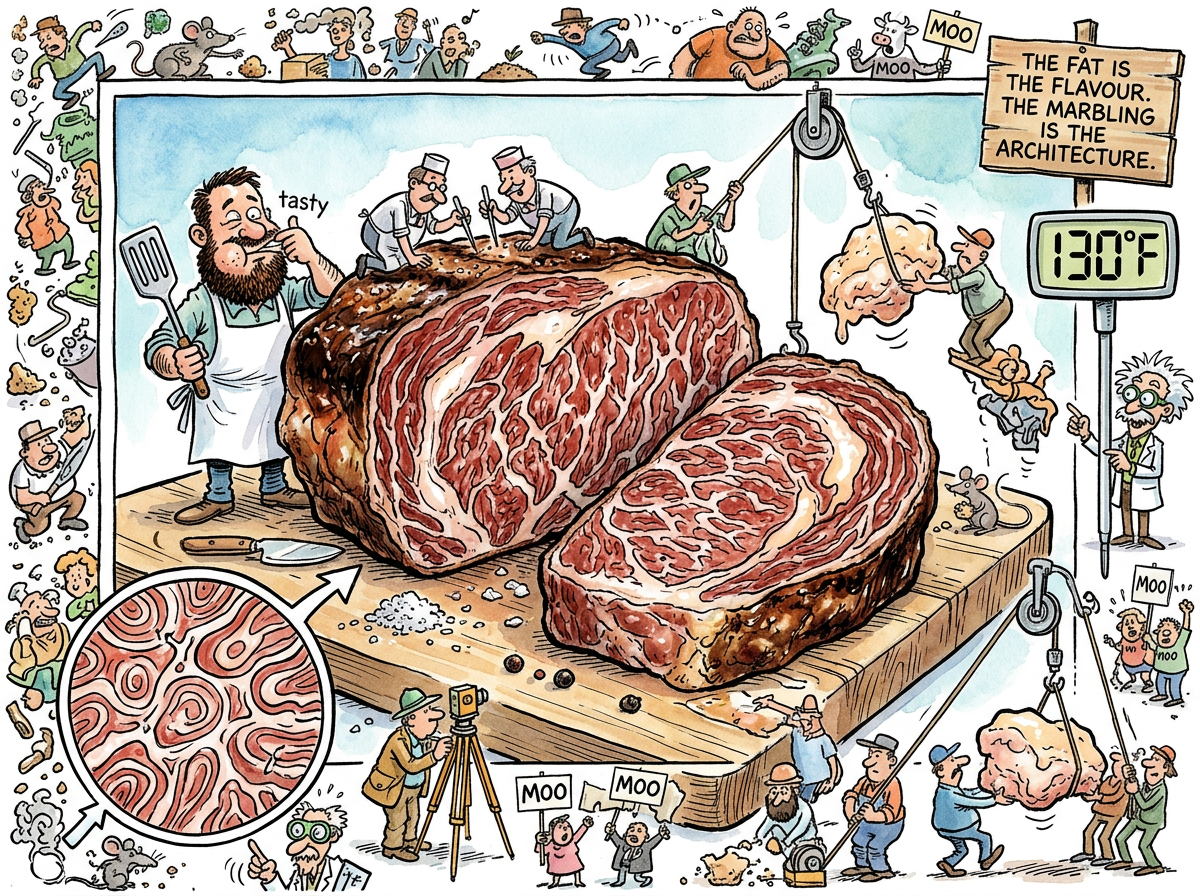
The Rib Eye is the steak that needs no bone, no handle, no theatre — just marbling. Intramuscular fat distributed through the muscle in white veins that melt during cooking, basting the meat from within, creating the richness and tenderness that make the rib eye the standard against which all other steaks are measured.
The rib eye is also, by necessity, the daily driver of the lifelog’s grill. The Flank Steak would hold this role if the Baltics stocked it reliably — but finding flank steak in Riga is harder than finding a fast page on the Azure portal. The rib eye inherited the rotation, alternating with Frango da Guia, and has proven that an accidental promotion can still be the right one.
The rib eye is the Tomahawk without the bone. The Cowboy Steak without the short bone. The pure expression of what all three cuts actually are: the longissimus dorsi and spinalis dorsi muscles from ribs 6–12, differentiated only by how much bone the butcher left attached and how much they charged for it.
The ribeye cap — the spinalis dorsi, the crescent-shaped muscle that wraps the outer edge — is the single best piece of steak on the animal. Some butchers sell it separately. When they do, buy it. When they don’t, the rib eye delivers it attached to the rest, which is the bundling strategy the Squirrel would propose and the Lizard would approve, because in this case the bundle is the point.
The Method
High heat. The Kamado. Pepper Smoke Salt. Four minutes per side for a standard thickness. Rest. Eat.
The rib eye does not need The Reverse Sear unless it is unusually thick (4cm+). A standard 2.5cm rib eye cooks directly over high heat, because the marbling does the internal work that a reverse sear provides externally — the fat melts, the meat bastes, the temperature distributes.
Do not cook past medium. Medium-rare (54°C (130°F)) renders enough fat to create flavour while preserving the texture that makes a rib eye worth the price. Medium (60°C (140°F)) is acceptable. Beyond medium, the marbling — the entire architectural purpose of the cut — melts away, and what remains is an expensive well-done steak that could have been any cut, because you cooked the distinction out of it.
Measured Characteristics
- The cut: longissimus dorsi + spinalis dorsi, ribs 6–12
- Best part: the cap (spinalis dorsi)
- What makes it special: marbling (intramuscular fat)
- Target internal: 54°C (130°F) (medium-rare)
- Maximum acceptable: 60°C (140°F) (medium)
- Beyond medium: a waste of marbling
- Cook time (2.5cm, Kamado): 8 minutes total
- Bone versions: Tomahawk (long bone), Cowboy Steak (short bone)
- Boneless version: this one (all meat, no drama)
- Daily driver status: yes (inherited from Flank Steak due to Baltic supply chain failure)
- Alternates with: Frango da Guia
- The fat is: the flavour
- The marbling is: the architecture