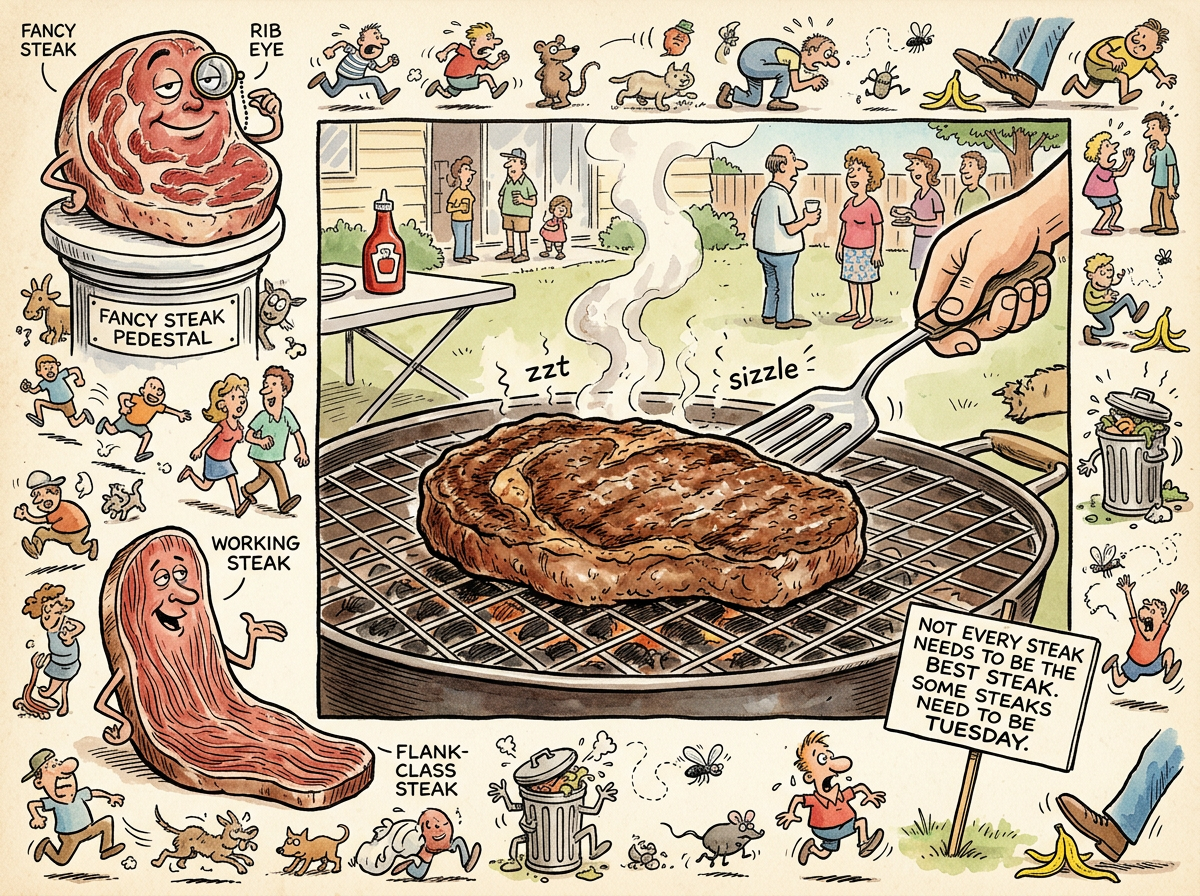
Sirloin is the honest steak — leaner than Rib Eye, less dramatic than Tomahawk, less theatrical than Picanha, and more forgiving than Flank Steak. It is the steak that does not demand technique, does not require a reverse sear, does not need a twelve-hour brine, and does not inspire arguments about the correct method. It is beef. On a grill. For dinner.
The sirloin is the steak for the nights when the developer wants protein, not a project. Pepper Smoke Salt. Kamado. Four minutes per side. Rest. Eat. Code.
Sirloin comes from the rear back of the animal — behind the short loin, above the round. It is leaner than rib eye because the muscles here work harder, which means less intramuscular fat, which means less self-basting, which means the cook must be more attentive to temperature. Medium-rare (54°C (130°F)) is essential. There is no marbling to rescue an overcooked sirloin.
The Comparison That Is Unfair But Inevitable
Sirloin is always compared to rib eye. This comparison is unfair. The rib eye has more marbling, more fat, more richness. The sirloin has more beef flavour, cleaner taste, less richness. They are different tools for different purposes. Comparing them is like comparing SQLite to PostgreSQL — one is simpler and sufficient for most things, the other is richer and appropriate for specific needs.
The developer who grills every day cannot eat rib eye every day. The sirloin is Tuesday. The rib eye is Saturday. Both are necessary. Neither replaces the other.
Measured Characteristics
- Marbling: less than rib eye, more than flank
- Flavour: beefy, clean, honest
- Forgivingness: moderate (don’t overcook)
- Target internal: 54°C (130°F)
- Cook time (Kamado): 8 minutes
- Drama: none
- Purpose: Tuesday