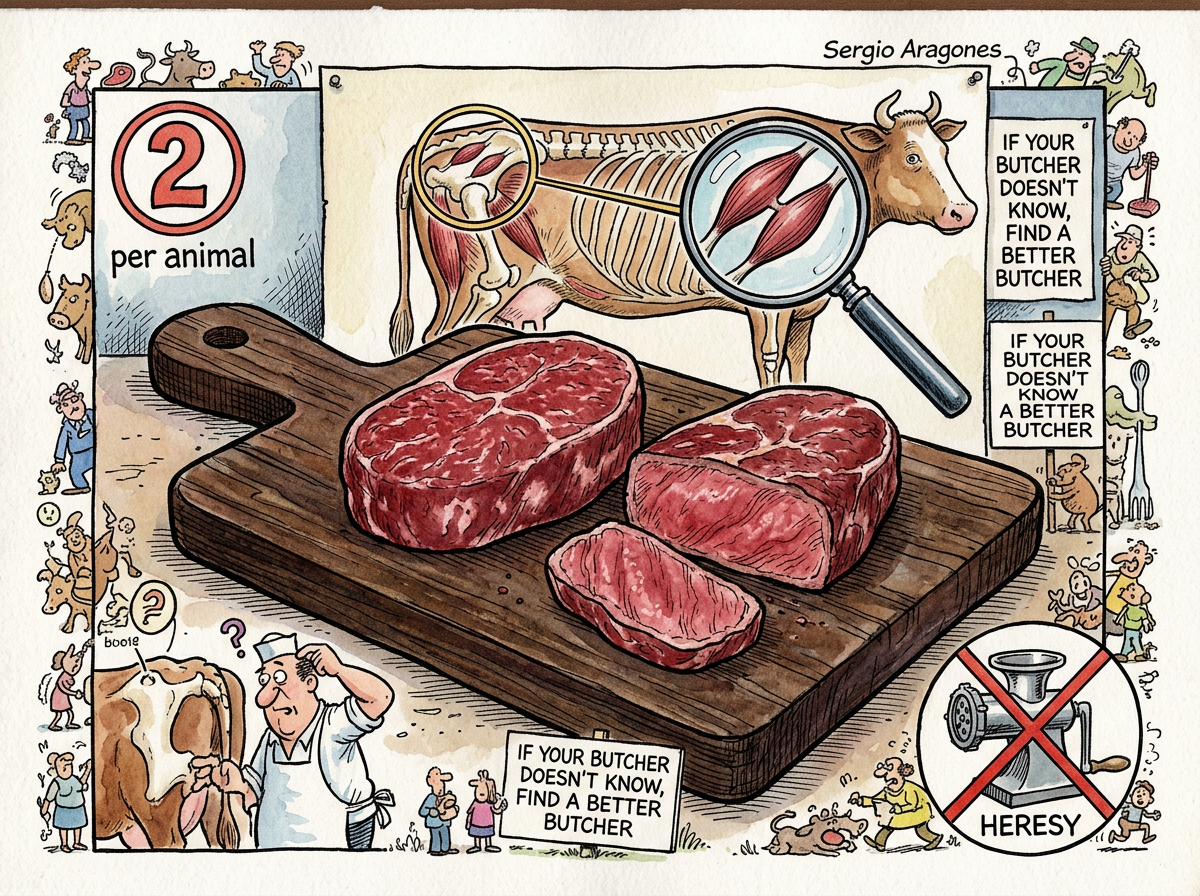
The Oyster Steak (also called the spider steak) is two small muscles nestled inside the aitch bone — the hip bone of the cow — that most butchers remove without knowing what they have and consign to the grinder. There are exactly two per animal. Each is roughly the size of a palm, oval, thick, with a marbling pattern that radiates outward from a central seam like the veins of an oyster shell, which is how the cut got its name and why anyone who has tasted one remembers it.
The oyster steak is the butcher’s secret — not because butchers are secretive, but because most butchers in most countries break the hip differently and the muscles end up in the trim pile. The cut is common in France (where it is called the araignée — the spider, for the web-like fat pattern) and virtually unknown in the Baltics, where the hip bone is processed by people who have better things to do than excavate two 150-gram muscles from the inside of a pelvis.
Finding an oyster steak requires one of three things: a butcher who knows what it is (rare), a whole hip bone and a YouTube video (ambitious), or a trip to a French butcher shop (reliable but geographically inconvenient from Riga). The developer who built a custom indexer because the available ones didn’t do what he needed is the same developer who would learn to break a hip bone for two small steaks. The effort-to-reward ratio is absurd. The reward justifies the absurdity.
The Cut
The oyster steak sits in a concavity on the interior surface of the aitch bone. The muscle does almost no work during the animal’s life — it stabilises the hip joint, and stabilising is not the same as moving. Muscles that don’t move stay tender. This is the same principle that makes the Rib Eye cap and the filet mignon what they are: the less a muscle works, the better it eats.
The marbling radiates from a central connective tissue seam outward, creating the spider-web pattern that gives the French name. This seam melts during cooking and bastes the steak from within. The result is a tenderness comparable to filet mignon with a beefiness comparable to rib eye — a combination that should not exist in a cut this small and this cheap, but does, because the cow did not read the pricing model.
The Method
Simplicity. The oyster steak is small and tender and needs nothing:
- Dry Brine — salt, 45 minutes minimum
- Pepper Smoke Salt — the trinity
- Cast iron or Kamado, very hot — 260°C (500°F)+
- Two minutes per side — the steaks are thin enough that two minutes sears the exterior and brings the interior to medium-rare
- Rest three minutes — then eat immediately, because there are only two and they are small and the table will not wait
Do not cook past medium-rare. The marbling that makes this cut special melts quickly. At medium, it is still good. At medium-well, the web has dissolved and what remains is a small, expensive piece of ordinary beef. The architecture was the fat. You cooked the architecture out.
Measured Characteristics
- Per animal: 2 (exactly)
- Weight per steak: 120–180g
- Shape: oval, oyster-shell, palm-sized
- Marbling pattern: radial, spider-web from central seam
- Tenderness: comparable to filet mignon
- Flavour: comparable to Rib Eye
- Combined: should not exist at this price point, but does
- Cook time: 4 minutes total (2 per side)
- French name: araignée (spider)
- Availability in Riga: theoretical
- Availability in France: ask the butcher for the araignée, receive it
- Availability everywhere else: “the what?”
- Butchers who know: the ones worth knowing
- Butchers who don’t: the ones grinding it into mince right now
- Price: cheap (when found), because demand requires awareness and awareness requires a butcher who knows
- The Squirrel’s marinade proposal: rejected (salt, pepper, smoke)