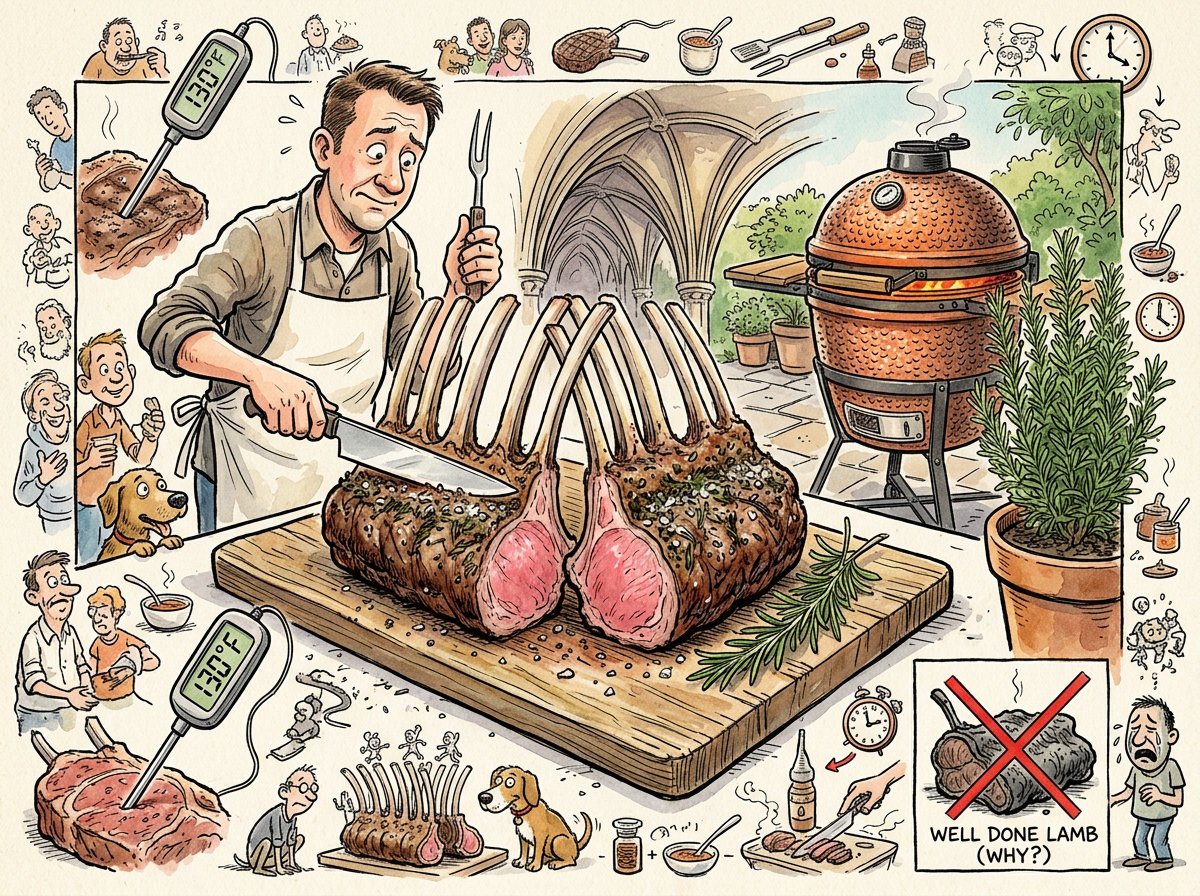
A rack of lamb is the rib section of a lamb — eight ribs, frenched clean, the bones arching upward, the meat between them tender and delicate and absolutely unforgiving of overcooking. Lamb is not beef. Beef has marbling that rescues a cook who overshoots by ten degrees. Lamb has a narrow window: medium-rare (54°C / 130°F) is perfection. Medium (60°C / 140°F) is acceptable. Beyond medium, the lamb fat solidifies, the texture turns waxy, and the delicacy that justified the price per kilogram disappears.
The rack of lamb is the Rib Eye’s Mediterranean cousin — both are rib cuts, both depend on the fat between the muscles, both reward restraint and punish excess. But where the rib eye is forgiving and robust, the rack of lamb is precise and demanding. The rib eye is SQLite — it works even when you’re slightly wrong. The rack of lamb is a production database migration — it requires knowing exactly what you’re doing.
The Method
The Kamado. Hot. Fast. No apology.
- Dry Brine — salt, rosemary (from the garden, because the garden is three metres from the Kamado, which is not an accident), garlic. Overnight in the fridge, uncovered, so the surface dries and the crust forms before the meat touches the grate.
- Kamado at 260°C (500°F) — direct heat, grate-level. The lamb goes on the hottest part of the grate, fat side down first.
- Four minutes per side — sear the fat cap, sear the meat, rotate for crosshatch if the developer is feeling aesthetic (the developer is always feeling aesthetic; the crosshatch is not optional).
- Move to indirect — if the rack is thick, move to the cool side of the Kamado for five minutes to let the centre reach 54°C (130°F) without burning the exterior.
- Rest ten minutes — longer than you think is necessary, shorter than the Squirrel would recommend (“what about a warming drawer and a resting protocol with foil tenting and—” no).
- Slice between the ribs — each chop gets its own bone handle. Like short ribs, the bone is the utensil.
The Traeger has no role here. Lamb does not want smoke — or rather, lamb wants the brief kiss of charcoal smoke from the Kamado, not the twelve-hour embrace of the Traeger’s hardwood pellets. Lamb is a sprinter. The Traeger is an ultra-marathon. The Kamado understands sprinters.
The Garden Adjacency
The rosemary grows next to the Kamado. This is not an accident. When riclib built the patio, the rosemary was planted within arm’s reach of the grill specifically so that lamb preparation requires zero trips to the kitchen. Tongs, knife, salt, rosemary — everything within two metres. The kitchen is for washing dishes. The patio is for cooking.
The Squirrel proposed a full herb garden with forty varieties, a hydroponic supplement system, and a companion planting chart cross-referenced with a seasonal BBQ calendar. The Lizard planted rosemary and thyme. Both grow. Both are sufficient. Both are within arm’s reach.
Measured Characteristics
- Ribs per rack: 8
- Weight: 700g–1kg
- Target internal: 54°C / 130°F (medium-rare)
- Maximum acceptable: 60°C / 140°F (medium)
- Beyond medium: waxy fat, lost tenderness, wasted money
- Grill: Kamado only (no Traeger, lamb doesn’t want smoke)
- Cook time: 10–15 minutes total
- Herb: rosemary (from the garden, arm’s reach from the Kamado)
- Bone utility: handle (like short ribs, like tomahawk, like everything worth eating)
- Crosshatch marks: not optional
- The Squirrel’s herb garden: forty varieties (rejected)
- The Lizard’s herb garden: rosemary and thyme (sufficient)
- Appropriate accompaniment: nothing (the lamb is the point)