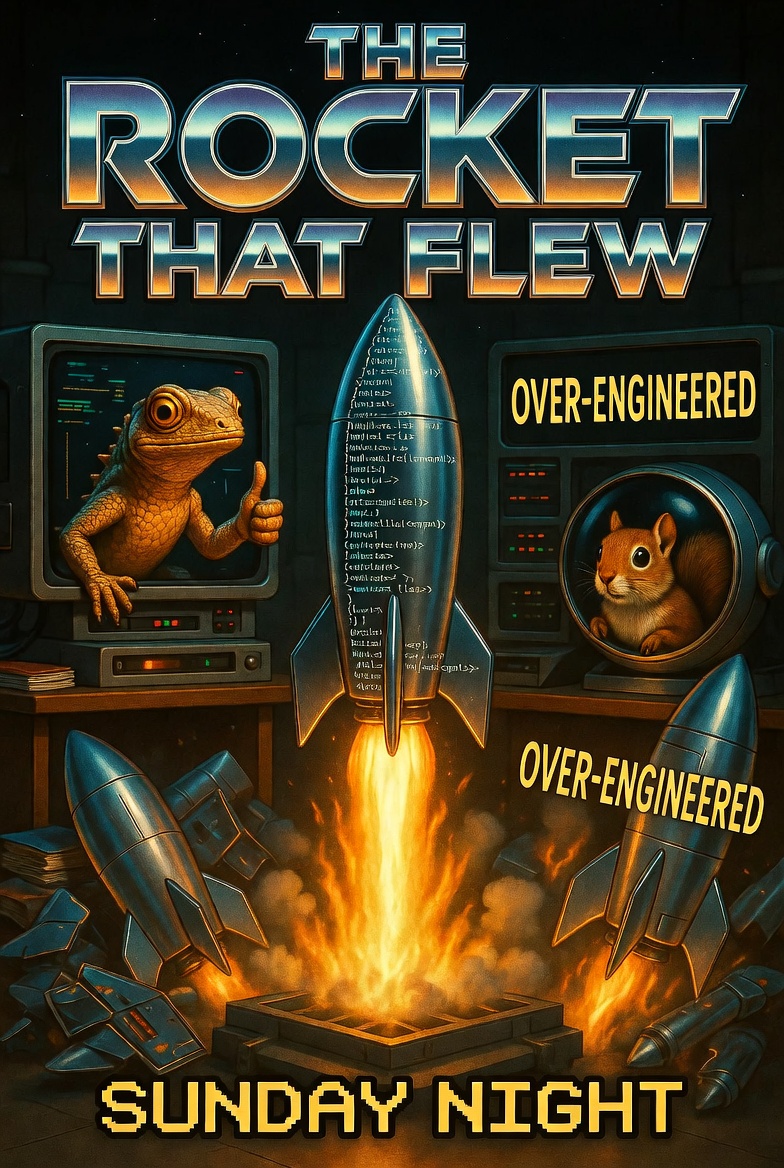
The Mission
After the Weekend Saga’s architectural epiphanies, it was time to prove the theory. Target: Rocket components with full lifecycle. Objective: Make web components feel like they belong in a Go codebase.
The Battle of the Infinite Spinner
00:15 AM: Page loads. Spinner spins. Spins more. Still spinning.
00:16 AM: “We need both JS imports? No wait, just one. No wait…”
00:17 AM: datastar-pro-rocket.js - the pro version with rockets, obviously.
Page loads. 🎉
The Signal Hunt
Components rendered. Looked beautiful. Clicked “Back”…
Uncaught ReferenceError: $tabID is not defined
    at cleanup
    at disconnectedCallback
The reptile brain speaks: “but when we create a component we can pass the tabid as a data-parameter somehow?”
Claude (99.7% trusting the reptile): Let me check the docs…
data-props:tab-id="string" + $$tabId = 🦎🧠💪
The Moment of Truth
📦 Loading catalog component
📋 Loading menu
📦❌ Catalog component closed    ← onCleanup() FIRED
The component lifecycle works. Setup runs, cleanup runs. Server knows when components live and die. Go templates serving Rocket fuel.
What We Shipped
- Menu loads Rocket components via
@get(no pre-rendering hidden divs) - Props passed properly:
data-attr:tab-id→$$tabId onCleanup()notifies server on component removal- Full emoji-powered lifecycle logging
The Stack (as of midnight)
Browser ──@get──→ Go Handler ──SSE──→ <agent-catalog>
                                          ↓
                                      $$tabId captured
                                          ↓
                                      onCleanup()
                                          ↓
                                      fetch('/close')
                                          ↓
                                      📦❌ logged
Status
- Rocket: launched 🚀
- Reptile brain: vindicated 🦎
- Architecture: validated ✓
- Sleep: soon™
The V3 POC lives. The game loop is dumb. The components are smart. NATS routes. Context manages lifecycle. And now Rocket components join the party.
Tomorrow: maybe Phase 2 Strategy component. Or maybe more kombucha. The reptile will decide.